Categories
Uncategorized

Lettre ouverte de mathématiciens russes au comité exécutif de l’IMU à propos du mathématicien et prisonnier politique Azat Miftakhov

86 mathématiciens russes ont envoyé la lettre qui suit au comité exécutif de l’Union Mathématique Internationale au sujet du cas de notre collègue Azat Miftakhov. Les mathématiciens russes peuvent continuer à signer cette lettre en suivant ce lien.

Chers et chères membres du comité exécutif de l’Union Mathématique Internationale (IMU),

A l’été 2022, des mathématiciens du monde entier vont se rassembler pour célébrer les résultats de nos collègues, et notre discipline en général, pendant le Congrès international des mathématiciens qui doit avoir lieu à Saint Pétersbourg, en Russie. Cet événement est de la plus haute importance pour la communauté mathématique mondiale. La liberté de réunion, la coopération scientifique ouverte entre des communautés académiques de nations différentes et la neutralité politique sont toutes des valeurs fondamentales que le Congrès va garantir à tous les mathématiciens, ce pourquoi nous saluons la décision d’organiser le Congrès en Russie et de rendre possible la participation de centaines de nos collègues. Pourtant, un mathématicien russe est privé de cette opportunité par les autorités russes, pour des motifs politiques – en opposition aux valeurs mêmes qui sont chères à l’IMU.

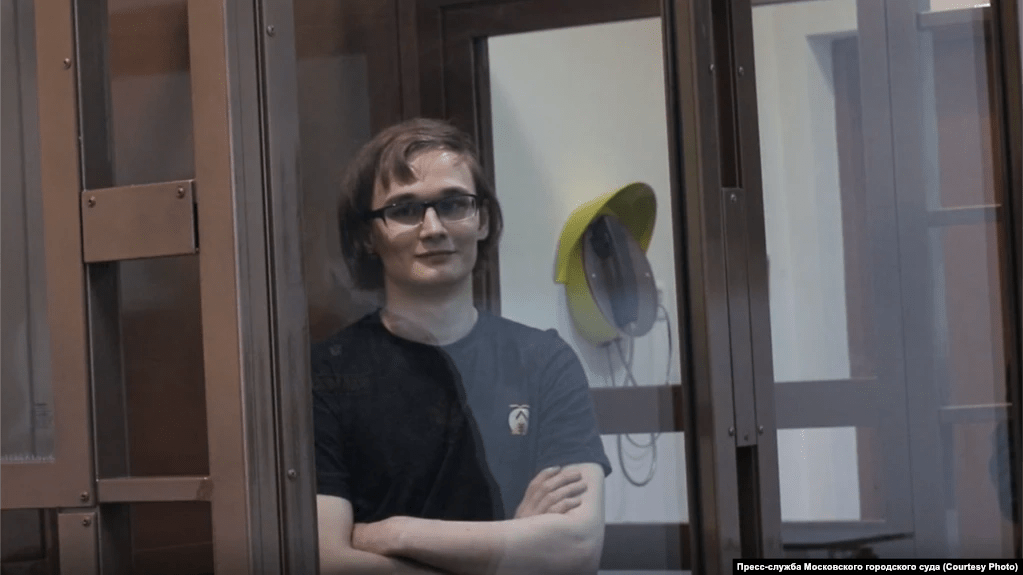
Nous faisons référence à Azat Miftakhov, étudiant diplômé de la Faculté de mécanique et de mathématiques de l’université d’Etat de Moscou et militant anarchiste, qui a été illégalement incarcéré par les autorités russes depuis le 1er février 2019. Accusé d’avoir brisé une vitre d’un bureau local du parti dirigeant de Russie, il a été initialement détenu sous l’accusation de tentative d’attaque terroriste. Grâce à la prompte réaction de la société civile et de la communauté mathématique mondiale, cette accusation a été abandonnée par les procureurs d’État, mais Miftakhov a été cependant reconnu coupable d’« hooliganisme » et condamné à une détention de six ans dans une prison fédérale — peine qu’il est toujours en train de purger. Pour le moment, il est forcé de travailler dans une scierie malgré des problèmes de santé et on lui refuse l’accès aux publications mathématiques récentes en anglais.

Les faits ne laissent aucun doute sur les motivations politiques derrière sa persécution. Il a été signalé qu’Azat et d’autres détenus ont été torturés pour les contraindre à des confessions (y compris par des menaces de pénétration avec un tourne-vis), que les autorités ont fait pression sur la famille d’Azat tout au long des procédures pénales. Toute l’accusation repose exclusivement sur le témoignage d’un « témoin secret » qui n’a pas résisté à l’examen public. Il y a eu de plus une apparente campagne de dénigrement contre Miftakhov dans des médias chauvins, dont certains contrôlés par l’état, campagne qui a inclus l’utilisation d’insultes homophobes contre lui et la diffusion d’informations privées qui n’ont pu être acquises de manière légale, comme des photos intimes d’Azat ou des enregistrements d’appels téléphoniques avec sa mère. 

L’affaire Miftakhov n’est en aucune manière un cas isolé : depuis le 31 janvier 2018, quand a eu lieu le crime dont Azat a été accusé, le Service fédéral de sécurité de Russie (connu sous le sigle de FSB) a redoublé sa répression contre les personnes ayant des opinions anarchistes en Russie. Par ailleurs, la communauté académique en général est devenue depuis la cible d’une pression croissante ou même de répression directe de la part des autorités russes. Il y a une longue liste de scientifiques russes arrêtés par le FSB, prétendument pour trahison ou espionnage, dont Valery Mitko, Valery Golubkin, Viktor Kudryavtsev et beaucoup d’autres. Les répressions contre les universitaires russes ne sont pas limitées aux sciences naturelles, un sociologue et recteur d’une importante université russe non étatique, Sergei Zuev, faisant partie des victimes les plus récentes.

Les soutiens venant de l’American Mathematical Society, de la London Mathematical Society, de la Société mathématique de France, de l’Unione Matematica Italiana, de la Sociedade Brasileira de Matemàtica et, enfin et surtout, de 54 membres de l’Académie des sciences de Russie témoignent amplement que la communauté mathématique internationale est gravement préoccupée par la situation. Une pétition pour faire entendre la voix sur l’affaire Miftakhov a été signée par plus de 300 mathématiciens, et soutenue par les Sociétés mathématiques d’Espagne, de France et d’Ukraine. Après tout, l’Union mathématique internationale a elle-même appelé le gouvernement russe à laisser Miftakhov terminer ses études doctorales en France, où la Fondation mathématique Jacques Hadamard et le Laboratoire de mathématiques d’Orsay lui ont proposé une position.

Si une attitude plus ferme et plus active n’était pas prise sur la question, l’appel pour la relaxe de Miftakhov tomberait dans l’oreille d’un sourd et ne provoquerait aucune réaction de la part du gouvernement russe – l’appel des 54 académiciens russes a ainsi échoué. Laisser simplement un haut responsable de la FSB, Dmitry Derevyashkin, sur la liste des organisateurs du Congrès international des mathématiciens (ICM) et permettre au Premier ministre de Russie, Mikhail Mishustin, de s’auto-promouvoir sur le compte twitter officiel de l’ICM, pendant qu’Azat reste incarcéré et contraint à travailler dans une scierie au lieu de faire de la recherche en mathématiques sont des actes qui vont contre les valeurs de neutralité politique et de solidarité professionnelle sur lesquelles l’IMU est construite. Nous sommes d’accord avec le fait que boycotter des événements scientifiques est inacceptable, mais continuer une collaboration avec les personnes et les organisations mêmes qui sont coupables de la persécution politique de scientifiques dans notre pays l’est aussi. C’est pourquoi nous soutenons l’idée exprimée par Ahmed Abbes et Cédric Villani et appelons l’IMU à faire ce qu’elle a eu une fois la bravoure de faire, en réponse à des répressions contre nos collègues mathématiciens : repousser le Congrès international des mathématiciens jusqu’au moment où Azat sera relâché de prison ou son affaire révisée, dans une procédure qui respecte ses droits constitutionnels. De plus, nous croyons fermement que le Congrès, se tenant en Russie, doit inclure un panel sur les mathématiciens en danger, par exemple ceux et celles qui sont persécutés pour des raisons politiques par des régimes autoritaires, panel qui serait ouvert au public et largement couvert par des journalistes indépendants.

La peine d’Azat doit se terminer le 5 décembre 2023, ce qui rend tout à fait possible de préserver la sorte de célébration que le Congrès international est pour chacun, et pas seulement pour ceux et celles qui ont la chance de ne pas être arbitrairement persécutés par un gouvernement autoritaire. La frilosité à agir serait un stigmate sur la réputation de l’IMU en tant qu’organisation professionnelle engagée pour les valeurs de liberté scientifique et de neutralité politique. 

Signé par 86 mathématiciens russes, y compris 23 signataires dont nous ne divulguons pas publiquement les noms pour leur sécurité et leur protection.

Liste des 63 signataires publics :

Arseniy Akopyan, Institute for Information Transmission Problems, Russian Academy of Sciences

Dmitri Alekseevsky, Institute for Information Transmission Problems

Maxim Balashov

Alexey Balitskiy, IAS

Mikhail Borovoi, Tel Aviv University

Alexander Bufetov, CNRS

Alisa Chistopolskaya, NRU HSE

Rodion Deev, IMPAN

Anna Dmitrieva, University of East Anglia

Ilya Dumanski, MIT

Alexander Efimov, NRU HSE and Steklov Mathematical Institute

Alexander Elashvili, Tbilisi State University, Razmadze Mathematical Institute

Sergey N. Fëdorov

Boris Feigin, HSE

Sergey Finashin

Yan V Fyodorov, King’s College London

Azat Gainutdinov, CNRS France

Nikita Gladkov, UCLA

Leonid Gurvits, The City College of New York

Lyalya Guseva

Michael Hitrik, UCLA

Andrei Ionov, MIT

Grigory Ivanov, MIPT and IST Austria

Victor Kac, MIT

Ilya Kapovich, Hunter College of CUNY

Roman Karasev, Institute for Information Transmission Problems

Nikolai Konovalov, University of Notre Dame

Dmitri Korshunov, IMPA

Yury Kudryashov, University of Toronto

Mikhail Lobanov, Lomonosov Moscow State University

Dimitri Markushevich, University of Lille

Irina Mamsurova, NRU HSE

Sergey Melikhov, Steklov Mathematical Institute

Leonid Monin, Max Planck Institute for Mathematics in the Sciences in Leipzig

Slava Naprienko, Stanford University

Nikita Nikolskiy, NRU HSE

Victor Ostrik, University of Oregon

Anna Perevalova

Alexander Petrov, Harvard University

Leonid Petrov, University of Virginia

Aleksei Piskunov, NRU HSE

Alexander Popkovich, NRU HSE

Sergey Popov, University of Porto

Vladimir Potapov, Sobolev Institute of Mathematics

Leonid Prigozhin, Ben-Gurion University of the Negev

Vladimir Protasov, Moscow State University

Andrei Rodin, Institute of Philosophy, Russian Academy of Sciences

Vasily Rogov, Humboldt University of Berlin

Daniel Rogozin, Institute for Information Transmission Problem of Russian Academy of Sciences

Slava Rychkov, IHES

Alexander Shen, CNRS & University of Montpellier

Ivan Solonenko, King’s College London

Mikhail Tamm, Moscow State University and Tallinn University

Grigory Taroyan, NRU HSE

Gleb Terentiuk, University of Michigan

Alexandra Utiralova, MIT

Misha Verbitsky, IMPA

Anatoly Vershik, Saint Petersburg branch of Steklov Mathematical Institute

Vladimir Vinnikov, HSE

Vladimir Zakharov

Bogdan Zavyalov, Max Planck Institute for Mathematics

Efim Zelmanov, UC San Diego

Vadim Zharnitsky, University of Illinois
Categories
Uncategorized

An open letter of Russian mathematicians to IMU Executive Committee regarding mathematician and political prisoner Azat Miftakhov

104 Russian mathematicians sent the following letter to the International Mathematical Union Executive Committee, concerning the case of our colleague Azat Miftakhov. Russian mathematicians can continue to sign this letter by filling out the form here.

Dear members of the International Mathematical Union (IMU) Executive Committee,

In Summer 2022, mathematicians of the world are going to convene to mark the achievements of our colleagues and discipline on the whole during the International Congress of Mathematicians scheduled to be held in Saint Petersburg, Russia. This event is of utmost importance for the global mathematical community. Freedom of association, open scientific cooperation between academic communities from different nations, and political neutrality are all cornerstone values that the Congress is set to secure for all mathematicians, which is why we laud the decision to hold the Congress in Russia and make it possible for hundreds of our colleagues to participate. Yet one of Russian mathematicians is deprived of this opportunity on political grounds by Russian authorities — in contrast to the very values that IMU holds dear.

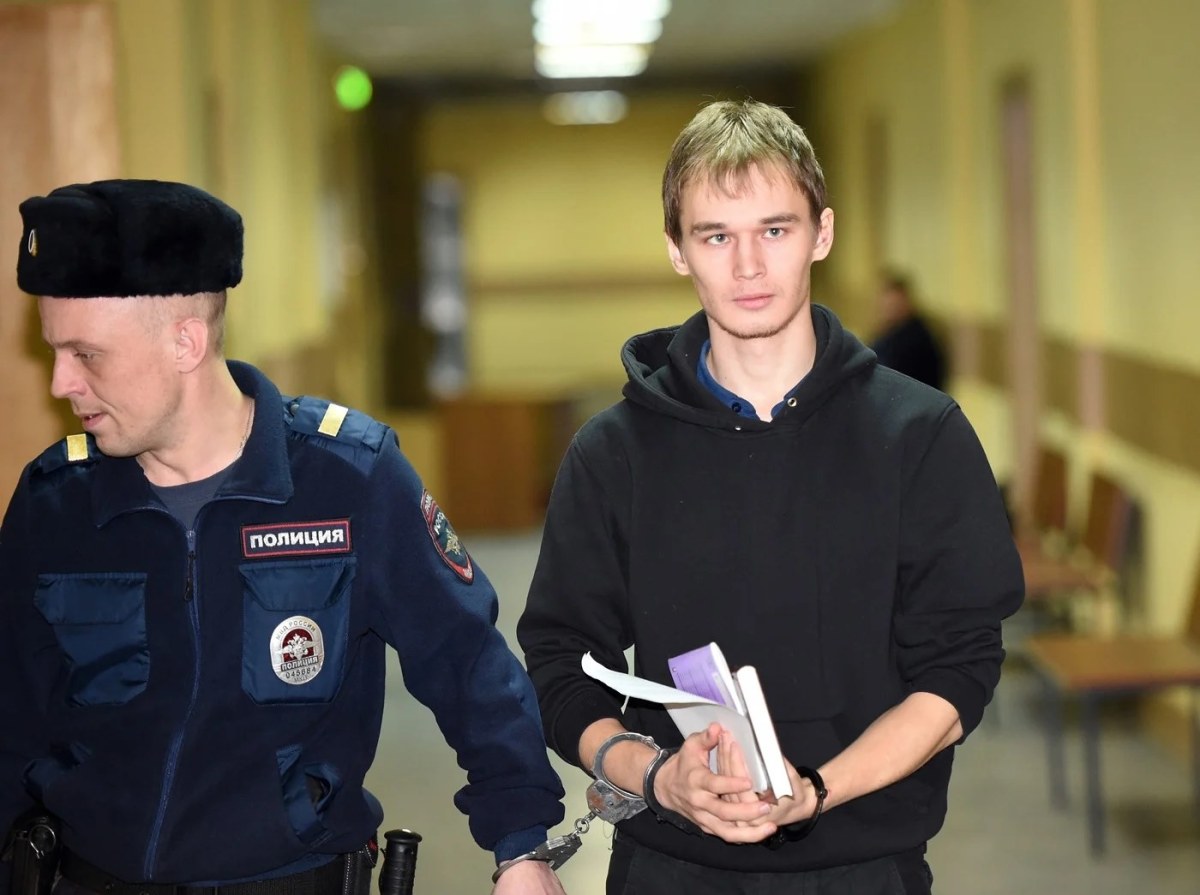
We are referring to Azat Miftakhov, a graduate student at Faculty of Mechanics and Mathematics of Moscow State University and an anarchist activist, who has been unlawfully incarcerated by the Russian authorities since February 1, 2019. Accused of breaking a window of a local office of Russia’s ruling party, he was initially detained under charges of attempting a terrorist attack. Thanks to the prompt reaction of civil society and the global mathematical community, this charge was dropped by the  state prosecutors, but Miftakhov was nonetheless convicted of committing “hooliganism” and sentenced to six years in federal prison — the term he has been serving to the present day. As of now, he is forced to work on a timber mill despite health conditions and is refused access to the recent English-language mathematical publications.

Facts leave no doubt about the political motivation behind his persecution. It has been scrupulously reported that Azat and other detainees were tortured in order to force out confessions (including threats of penetration with a screwdriver); authorities pressured Azat’s family in the course of criminal proceedings. The whole indictment is based solely on the testimony of a “secret witness” that fails to stand up to public scrutiny. In addition, there was an apparent smear campaign against Miftakhov in jingoist media, some of them state-controlled, that involved using homophobic slurs against him and sharing private information that could not have been acquired in a legal way, such as leaked intimate photos of Azat or recordings of the phone calls with his mother.

The Miftakhov case is by no means an outlier: ever since January 31, 2018, when the crime Azat had been accused of took place, Russia’s Federal Security Service (also known as FSB) only doubled down on its crackdown on people with anarchist views in Russia. However, the academic community in general has since become the target of mounting pressure or even outright repression from Russian authorities. There is a long list of Russian scientists arrested by FSB for alleged treason or espionage including Valery Mitko, Valery Golubkin, Viktor Kudryavtsev and many others. The repressions against Russian scholars are not limited to the natural sciences, with a sociologist and a rector of a major Russia’s non-state university Sergei Zuev being among the most recent victims.

Endorsements coming from the American Mathematical Society, London Mathematical Society, Mathematical Society of France, Italian Mathematical Union, Brazilian Society of Mathematics, and, last not least, from 54 members of the Russian Academy of Sciences serve as ample evidence that the international mathematical community is indeed gravely concerned with the situation. A petition to raise the voice about the Miftakhov case was signed by more than 300 mathematicians and supported by Mathematical Societies of Spain, France, and Ukraine. After all, the International Mathematical Union has itself called the Russian government to let Miftakhov finish his graduate studies in France, where he was proposed a position by the Fondation Mathématique Jacques Hadamard and the Laboratoire de Mathématiques d’Orsay.

Without taking a more steadfast and active stance on the matter, the call for Miftakhov’s release would fall upon deaf ears and result in no action on behalf of the Russian government, like the call of the 54 Russian academicians fell. Simply letting the FSB officer Dmitry Derevyashkin to be listed as a co-organizer of the International Mathematical Congress (ICM) and allowing the Prime Minister of Russia Mikhail Mishustin to promote himself on the ICM official twitter account, while Azat is kept incarcerated and forced to work on a timber mill in lieu of doing mathematical research, is an act that goes against the values of political neutrality and professional solidarity that IMU is built upon. We agree that boycotting scientific events is unacceptable, but neither is continued collaboration with the very people and organizations who perpetrate political persecution of scientists in our country. This is why we support the idea expressed by Ahmed Abbes and Cédric Villani and call for IMU to do something it has once had the bravery to do in response to repressions against fellow mathematicians — that is to defer the International Congress of Mathematicians to the moment Azat is released from prison or his case is reviewed in a process that respects his constitutional rights. Moreover, we believe that the Congress, being held in Russia, must include a sectional panel on mathematicians in danger, such as those persecuted on political grounds by authoritarian regimes, which would be open to the public and widely covered by independent journalists.

Azat’s sentence is expected to end on December 5, 2023, which makes it completely possible to preserve the kind of celebration ICM is for everyone, not just those lucky not to be arbitrarily persecuted by an authoritarian government.Reluctance to act would be a scar upon the good name of IMU as a professional organization committed to the values of scientific freedom and political neutrality.

Signed by 104 Russian mathematicians, including 24 non-public signatories whose names we are withholding for their safety and protection.

List of the 80 public signatories:

  1. Arseniy Akopyan, Institute for Information Transmission Problems, Russian Academy of Sciences
  2. Dmitri Alekseevsky, Institute for Information Transmission Problems
  3. Maxim Balashov
  4. Alexey Balitskiy, IAS
  5. Mikhail Borovoi, Tel Aviv University
  6. Alexander Bufetov, CNRS
  7. Alisa Chistopolskaya, NRU HSE
  8. Petr Chunaev, ITMO University
  9. Rodion Deev, IMPAN
  10. Anna Dmitrieva, University of East Anglia
  11. Ilya Dumanski, MIT
  12. Alexander Efimov, NRU HSE and Steklov Mathematical Institute
  13. Alexander Elashvili, Tbilisi State University, Razmadze Mathematical Institute
  14. Roman Fedorov, University of Pittsburgh
  15. Sergey N. Fëdorov
  16. Boris Feigin, HSE
  17. Sergey Finashin
  18. Yan V Fyodorov, King’s College London
  19. Azat Gainutdinov, CNRS France
  20. Nikita Gladkov, UCLA
  21. Artem Gureev, University of Western Ontario
  22. Leonid Gurvits, The City College of New York
  23. Lyalya Guseva
  24. Michael Hitrik, UCLA
  25. Andrei Ionov, MIT
  26. Grigory Ivanov, MIPT and IST Austria
  27. Victor Kac, MIT
  28. Ilya Kapovich, Hunter College of CUNY
  29. Roman Karasev, Institute for Information Transmission Problems
  30. Nikolai Konovalov, University of Notre Dame
  31. Dmitri Korshunov, IMPA
  32. Gregory Kucherov, CNRS
  33. Nikolai Kuchumov, NRU HSE
  34. Yury Kudryashov, University of Toronto
  35. Mikhail Lobanov, Lomonosov Moscow State University
  36. Igor Lysenok, Steklov Mathematical Institute
  37. Alexander Magazinov
  38. Irina Mamsurova, NRU HSE
  39. Dimitri Markushevich, University of Lille
  40. Anastasia Matveeva, Universitat Politècnica de Catalunya
  41. Sergey Melikhov, Steklov Mathematical Institute
  42. Leonid Monin, Max Planck Institute for Mathematics in the Sciences in Leipzig
  43. Slava Naprienko, Stanford University
  44. Nikita Nikolskiy, NRU HSE
  45. Ilya Novikov, The Gertner Institute, Chaim Sheba Medical Center
  46. Victor Ostrik, University of Oregon
  47. Anna Perevalova
  48. Alexander Petrov, Harvard University
  49. Leonid Petrov, University of Virginia
  50. Aleksei Piskunov, NRU HSE
  51. Semën Podkorytov
  52. Gleb Pogudin
  53. Alexander Popkovich, NRU HSE
  54. Sergey Popov, University of Porto
  55. Vladimir Potapov, Sobolev Institute of Mathematics
  56. Leonid Prigozhin, Ben-Gurion University of the Negev
  57. Vladimir Protasov, Moscow State University
  58. Andrei Rodin, Institute of Philosophy, Russian Academy of Sciences
  59. Vasily Rogov, Humboldt University of Berlin
  60. Daniel Rogozin, Institute for Information Transmission Problem of Russian Academy of Sciences
  61. Slava Rychkov, IHES
  62. Alexander Shen, CNRS & University of Montpellier
  63. Ilias Sibgatullin
  64. Ivan Solonenko, King’s College London
  65. Mikhail Tamm, Moscow State University and Tallinn University
  66. Grigory Taroyan, NRU HSE
  67. Yana Teplitskaya
  68. Gleb Terentiuk, University of Michigan
  69. Arkady Tsurkov, Federal University of Rio Grande do Norte (UFRN)
  70. Alexandra Utiralova, MIT
  71. Dmitri Vassiliev, University College London
  72. Misha Verbitsky, IMPA
  73. Anatoly Vershik, Saint Petersburg branch of Steklov Mathematical Institute
  74. Vladimir Vinnikov, HSE
  75. Vladimir Zakharov
  76. Bogdan Zavyalov, Max Planck Institute for Mathematics
  77. Efim Zelmanov, UC San Diego
  78. Vadim Zharnitsky, University of Illinois
  79. Boris Zilber, University of Oxford
  80. Alexandr Zubkov United Arab Emiartes University; Sobolev Institute of Mathematics, SORAN, Omsk Branch
Categories
Uncategorized

MSU post-graduate student Azat Miftakhov was injured at work in the Kirov colony

A mathematician and a political prisoner Azat Miftakhov was injured during an industrial accident while working on a sawmill at the Correctional Colony no. 17 in the Omutninsky district go the Kirov province, as reported by his wife Elena Gorban.

At the sawmill Azat had to work with large diameter logs, in -25C frost, rolling the logs with his left hand onto a moving belt. The work is known to be dangerous,  and without much training he suffered a mishap and his hand was crushed.

Azat was taken to the infirmary, where an X-ray of his hand showed that there was no fracture. Nevertheless he received a work release for a week.  The accident happened in October but Azat did not inform his family then, not wanting them to worry. According to Elena Gorban, over a month after the accident a finger on Azat’s left hand was still visibly swollen. Elena had a short meeting with her husband at the Correctional Colony no. 17 on December 17. The meeting took place in a special room with a glass partition, with Azat and Elena communicating on the phone, and a correctional employee of the colony present the entire time.

Azat reported that he is finishing a carpentry course, learning to make hangers, mops and stools. There will be an exam in January where he will need to make a bar stool. Azat also wants to complete a glazier course. According to him, the prisoners in the Kirov colony are fed well, much better than in Moscow. However, it is very cold in the Omutninsky district, and they are forbidden to cover their faces.

Reported by Idel.Realii

Categories
Uncategorized

The Committee of Concerned Scientists: Russian Mathematics PhD student convicted of charges without evidence

On November 22, 2021, the Committee of Concerned Scientists sent a letter to the President of the Russian Federation concerning the mathematics PhD student Azat Miftakhov who has been detained since February 2019 and recently convicted on charges of manufacture of explosives and breaking a political party window. These charges appear to be based on secret, unreliable witnesses and he has been subjected to torture. They ask the President to show good will and pardon Miftakhov given his young age and promise as a mathematician.

Categories
Uncategorized

Update on the case of Azat Miftakhov on November 12, 2021

On October 6, 2021, the IMU Executive Committee issued a statement concerning the case of our colleague Azat Miftakhov who has been arbitrarily detained by Russian authorities since February 2019:  “The IMU expresses its wish that Miftakhov be allowed to complete his doctorate in France, enabling him to pursue a career in mathematics, and asks that he be released at the earliest opportunity so that he can take up his studies in France.”

The Azat Miftakhov Committee welcomes this statement and renews its call for the immediate and unconditional release of Azat Miftakhov.

The Russian human rights organization Memorial announced on November 9, 2021 that Azat Miftakhov had been placed by the prison administration on a special list “as prone to suicide, terrorism, drug use and assaults against prison staff.” As a result, Azat is forced to appear in front of a camera every two hours, and at night a prison guard videotapes how he sleeps.

On November 11, 2021, the Russian human rights organization Memorial announced that it received a notification from the Supreme Court that the Prosecutor General’s Office had filed a lawsuit to liquidate Memorial International for systematic violations of the law on “foreign agents.”

Founded in January 1989 with the support of physicist and Nobel Peace Prize winner Andrei Sakharov, Memorial played a leading role in documenting Stalinist repression and continues to do so to this day, while these crimes are relativized or swept under the carpet.

The law on “foreign agents”, introduced in July 2012 by legislators from the governing United Russia party to oppress civil society organizations, continues to evolve, to the point that it is no longer just a question of funding:  according to the latest directives of the FSB, the Russian secret services, any research activity relating to themes such as space or defense may be sufficient to obtain this label.

As we have already reported in our letter to the IMU Executive Committee on August 23, we find it particularly shocking that Dmitry S. Derevyashkin, first Deputy Head of Department “P” of the Economic Security Service of the FSB, sits on the ICM Executive Organizing Committee.

The Azat Miftakhov Committee

Categories
Uncategorized

Human rights a thorn in the side of the International Mathematical Union: the case of Azat Miftakov

By Ahmed Abbes and Cédric Villani

At the end of September, the International Mathematical Union (IMU) will celebrate its centenary with great pomp in Strasbourg, the city where it was created in 1920. The event, entitled “Mathematics without Borders,” has been postponed for one year due to the Covid-19 pandemic. “The centennial of the foundation is a moment to reflect on the long and varied history of international cooperation of mathematicians and show that the modern IMU seeks to include mathematicians from all countries,” announce the organizers.

The IMU oversees and convenes the International Congress of Mathematicians (ICM) every four years, which is the largest congress for mathematics and at which prestigious prizes are awarded, including the Fields medals. The next Congress will take place in St Petersburg in July 2022. The Russian government has pledged to grant visa-free entry to mathematicians from all countries, which seems to have tipped the scales in favor of St Petersburg in its bid against Paris. However, the ideal of “Mathematics without Borders” will not be achieved in this ICM. Several colleagues have already expressed strong reluctance to travel to Russia, whose government violates human rights and suppresses fundamental freedoms, including members of the LGBTQ community and Ukrainian mathematicians. They will not be the only ones who cannot attend the festivities. The young Russian mathematician Azat Miftakhov will not participate either. He will probably be imprisoned in the correctional colony number 17 in Omutninsk in Kirov province, following an iniquitous judgment.

Miftakhov’s doctoral studies at Moscow State University were interrupted in February 2019, when he was arrested by police and charged with manufacturing explosives. At the police station he was tortured, but after three days the court threw out the case for lack of evidence. He was released but then rearrested before leaving the police station; this time he was charged with having participated in a plot more than a year earlier to break a window at an office of President Putin’s United Russia Party. Miftakhov pleaded not guilty, but this January 18, 2021, a Moscow court pronounced a six-year sentence in a penal colony, on the basis of testimony by two secret “witnesses” — one of whom claimed to have identified the masked Miftakhov by his “expressive brows,” and who died several months before the trial. The other two defendants, who admitted their guilt while denying that Miftakhov was involved in the incident, received suspended sentences of between two and four years.

The Russian human rights organization “Memorial” recognized Miftakhov’s political prisoner status as early as 2019.  Two petitions in his support had been published by the time of his January sentencing: one in Russia had gathered more than 86000 signatures, while a second petition was signed by over 3,400 mathematicians from 15 countries. Before the verdict, academicians, professors, and corresponding members of the Russian Academy of Sciences had published an open letter calling on the court to release Miftakhov. Human Rights Watch declared after the verdict that “Azat Miftakhov’s conviction is clearly unjust and unfair, and authorities should immediately and unconditionally overturn it.” 

Mathematicians around the world were shocked by the court’s decision.  Just before the court announced the sentence in January, 47 mathematicians sent a letter to the St Petersburg ICM Organizing Committee asking them to take an active position on this case. The Hadamard Doctoral School of Mathematics at Paris-Saclay University issued a statement on March 4, 2021 naming Azat Miftakhov an honorary student and inviting him to complete his doctorate in Paris once he is released. Many professional associations, including the national mathematical societies in the US, UK, France, Brazil, Italy, and Spain, have issued public statements expressing their concern about his case. 

A committee of mathematicians was formed last January to defend Azat Miftakhov. It organized several actions, including the Azat Miftakhov Day on June 16, 2021, which once again demonstrated the strong solidarity of the international mathematical community with Azat.

A few weeks later, on August 1st, Azat Mifatkhov was  moved to the correctional colony number 17 in Omutninsk in Kirov Province, which is known for the mistreatment and torture of prisoners. He was first assigned to hard physical labor in a woodworking shop, consisting in cleaning sawdust from under the sawmill. Later, he informed his wife that his working conditions have improved somewhat and he now “carries boards instead of sawdust,” which, according to him, is much easier. He described his life in the penal colony in detail in a personal letter to his wife. “At the entrance to the camp, almost all of my clothes were not allowed through. They left me only socks, underpants, gloves and thermal underwear (…) the same with books: all my books were taken, supposedly for a check” he wrote. 

Despite the strong support of the mathematical community, one voice is conspicuously lacking in its support for Azat, namely the voice of the International Mathematical Union. Although the IMU expressed, in rather conditional terms, concern about his fate in the past, it still has not called for his release. On August 23, 2021, the Azat Miftakhov Committee, supported by 322 mathematicians including Fields Medal and Abel Prize winners, and 4 mathematical societies, sent a letter to the IMU Executive Committee regarding Azat’s case. “It is now time for the IMU to follow the position adopted by the international mathematical community it represents and to call for the immediate and unconditional release of Azat Miftakhov” they wrote. “As the IMU’s partner in the organization of the next ICM in July 2022 in St Petersburg, the Russian government cannot ignore such a call,” they added.  To date, the IMU Executive Committee has not responded to this letter.

It is not the first time the IMU has faced blatant human rights abuses. The 1982 ICM was initially planned in Warsaw. But following General Jaruzelski’s coup d’état in Poland in December 1981, a state of emergency was declared and thousands of activists were thrown into prison or camps, including several mathematicians. The IMU decided in April 1982 to postpone the ICM. It was finally held in August 1983 after the release of the imprisoned mathematicians and the lifting of the curfew. 

This famous historical case should have inspired the IMU Executive Committee to work to obtain the release of our young colleague. Instead, it continues to ignore the support calls issued by the international mathematical community. In doing so, the IMU Executive Committee may jeopardize the upcoming ICM; attending the congress in St Petersburg while Azat is arbitrarily detained will pose a serious dilemma for the entire mathematical community.

Ahmed Abbes, mathematician, Director of research at CNRS, IHES, Paris

Cédric Villani, mathematician, Laureate of the Fields Medal (2010), Université Lyon 1 Claude Bernard, Member of the French Academy of Sciences and the Pontifical Academy and Member of the French National Assembly

Categories
Uncategorized

Over 300 mathematicians call on the IMU to speak out on the case of Azat Miftakhov

The IMU Executive Committee did not respond to our message of August 23, 2021 regarding the case of our colleague Azat Miftakhov. We sent them the following new message on September 6, 2021.

Dear members of the International Mathematical Union (IMU) Executive Committee,


We sent you a letter regarding the case of our colleague Azat Miftakhov on August 23. We would like to inform you that since then, the letter has been signed by more than 300 mathematicians and 3 learned mathematical societies. The full signatories list is available at this address

We take this message to inform you that Azat has started serving the rest of his sentence in the Omutninsk penal colony number 17 after a period of quarantine. He was first assigned to hard physical labor in a woodworking shop, consisting in cleaning sawdust from under the sawmill. Later, he informed his wife that his working conditions have improved somewhat and he now “carries boards instead of sawdust,” which, according to him, is much easier. He described his life in the penal colony in detail in a personal letter to his wife. “At the entrance to the camp, almost all of my clothes were not allowed through. They left me only socks, panties, gloves and thermal underwear … the same with books: all my books were taken, supposedly for a check” he wrote.

We renew our urgent request to the IMU to follow the position adopted by the international mathematical community it represents and to call for the immediate and unconditional release of Azat Miftakhov. The physical and moral integrity of our young colleague are at stake.

The Azat Miftakhov Committee

Categories
Uncategorized

Azat Miftakhov writes to his wife about his life in the penal colony number 17 in Omutninsk

Azat Miftakhov said in a telephone conversation with his wife Elena Gorban that his working conditions in the Omutninsk penal colony # 17 have improved somewhat and he now “carries boards instead of sawdust,” which, according to him, is much easier. The mathematician described his life in the penal colony in detail in a personal letter to his wife. “Idel.Realii” published some excerpts with the consent of the wife of the political prisoner, which we translate below.

I dislike many things here. The stupid militarism, the smart-mouth employees, some of whom communicate extremely dismissively with the convicts, including obscenities, and the prospect of working at a stupid mind-numbing job. All this elicits protest. (…)

When they [the colony authorities] first meet me, they all immediately ask the same question, what kind of [the criminal code] article is this 213rd. 
I explain that it is hooliganism. Employee: “What did you do to misbehave?” “I did not do anything”. He: “What was written in the verdict?” I say that I was accused of vandalizing the United Russia office. He: “Why did you smash it?” “I did not smash, and I have nothing to do with the case,” and I begin to explain about the secret witness, but he no longer listens to me and begins to prove to me that there are no innocent people here … ” (…)

Here is one employee who distinguished himself from the others. When he found out what I was accused of, he asked me sternly: “What are you against Russia? I mean, not United Russia, but Russia?” Me: “ No, I am for the Russian people, but against this party. ”He:“ Is that why it was necessary to smash the office? Have you built anything before you smashed? Did you build a house, planted a tree, raised a child?” I say: “Let’s start with the fact that I have nothing to do with this business … ” Have you been sentenced? Was the sentence confirmed? So, you were involved! “. Almost always during such conversations, a biographical questionnaire is conducted, and in this connection they talk about my education. Then, having learned that I studied and worked at Moscow State University, that I am a mathematician, etc. they claim that everything was fine with me, and I ruined everything myself, being drawn into anarchist movements.” (…)

As for the conditions, there are no complaints.  We live next to the forest, so we sleep well at night. The food here is good, even better than in the Kirov SIZO, and much better than in Butyrka. (…)

At the entrance to the camp, almost all of my clothes were not allowed through.  They left me only socks, panties, gloves and thermal underwear … now I have no T-shirts and pants at all, but there is only a T-shirt and overalls issued by the colony … the same with books: all my books were taken, supposedly for a check. (…)

If I had at least some guarantees that for my obedience I can count on parole, say in about in six months, I would probably endure everything and obey the requirements of the administration. But since I expect every trick that could take away my parole, I am considering refusing my assigned work. Sometimes, I think that if they reprimand me for some trifle, like an unbuttoned button on my uniform, this will be sufficient reason for me to do so.

Categories
Uncategorized

Novaya Gazeta: MSU graduate student Azat Miftakhov, convicted in the case of the “broken window”, was sent to hard labor in the colony

Translation of an article published on August 24, 2021 in “Novaya Gazeta”.

Anarchist and mathematics graduate student of the Moscow State University Azat Miftakhov, sentenced to six years in prison in the case of a broken window in the office of United Russia, was assigned to hard physical labor in a woodworking shop. This was told to Novaya Gazeta by his wife Elena Gorban.

Now Miftakhov is serving his sentence in correctional colony No. 17 of the Kirov region (Omutninsk). During the visit of a local lawyer Svetlana Frolova, Miftakhov said that after two and a half years in the pre-trial detention center cell, he was sent to clean sawdust from under the sawmill. Miftakhov would like to transfer to a different work assignment.

Relatives of the anarchist, according to Gorban, fear that this work may be chosen as a tactic of pressure on Miftakhov.

“This is hard unreasonable work, which in other colonies is usually automated. If he is sent to a strict, poorly known colony far from the place of his residence, and immediately upon arrival he is given such work, after two and a half years of forced restriction of no physical activity, it may well be a desire to make his remaining term as difficult as possible within the law. But other prisoners who probably do the same job, too, are not in the best conditions either,” Gorban says.

Former political prisoner Ivan Astashin, who has served almost 10 years in prison in the case of the Autonomous Combat Terrorist Organization (banned in the Russian Federation), said in his Telegram channel that in the colonies such sawmills can be automated, and work on the Soviet sawmill, which “has seen Brezhnev”, is “a lesson for masochists”. “I don’t know what’s going on at the production site in Omutninsky IK-17 – the sawdust suction hood broke there, or it’s not installed there at all, so that prisoners don’t have any strength to defend their rights. But one thing I’ll say for sure is that it is very hard for Azat there now. <…> It’s akin to torture,” he wrote.

It became known that Miftakhov was transferred to IK-17 of the Omutninsky district in early August. Prisoners of this colony talked about torture, and their testimony was published by Radio Liberty.

On August 15, Miftakhov came out of quarantine. He said that the administration demands to welcome the colony’s employees with the words “Hello, citizen boss”. He was queued to call his relatives, but so far the anarchist has not had the opportunity to contact his family, says Gorban.

Earlier, the Moscow City Court recognized Miftakhov’s sentence as legal. At the same time, the court excluded the smoke bomb from among the weapons, but the hammer that broke the window in the office of United Russia was retained in the case.

Miftakhov was arrested on February 1, 2019 in Moscow in the case of illegal manufacture of explosives (Part 1 of Art. 223.1 UK), found at a bus stop in Balashikha. The investigation found no evidence indicating the anarchist’s involvement in the case, and Azat was released. At the exit from the detention center, he was detained again in the case of vandalism (Part 1 of Art. 214 of the Criminal Code). Later, the prosecution was reclassified as hooliganism.

On January 18, 2021, the Golovinsky court found Miftakhov guilty of hooliganism motivated by political hatred committed by a group of persons (Part 2 of Art. 213 of the Criminal Code) – January 30, 2018, the defendants in the case attacked the office of United Russia. According to the court, Gorban broke the window with a hammer (she was assigned a suspended sentence), Alexey Kobaidze (wanted) threw a smoke checker into the office, Andrey Yeykin (conditional term) filmed everything that happened on video, Svyatoslav Rechkalov (wanted) published a record on the Internet, and Miftakhov stood close and watched the situation. The whole criminal case is based on the testimony of secret witnesses.

Categories
Uncategorized

The International Mathematical Union must support Azat Miftakhov

The Azat Miftakhov Committee, supported by 339 mathematicians and 4 mathematical societies, sent the following letter to the International Mathematical Union Executive Committee, concerning the case of our colleague Azat Miftakhov. Mathematicians who wish to support this letter can sign it by filling out the form here; an updated list of signatories will be sent to the IMU in a few weeks.

August 23, 2021

Dear members of the International Mathematical Union (IMU) Executive Committee,

On January 5, 2021, we sent you a letter to draw your attention to the case of Azat Miftakhov, a doctoral student in mathematics at Moscow State University, arbitrarily detained by Russian authorities since February 2019.

On January 8, 2021, following our letter, you issued a statement “expressing your deep concern for the well-being of Azat Miftakhov”. “While the IMU cannot know the facts of the case and does not condone acts of vandalism, there has been widely held concern in the media over Miftakhov’s treatment while in custody and over the fairness of the trial and sentencing proceedings, soon to be completed” the statement reads. 

Prof. Carlos E. Kenig, President of the IMU and Prof. Helge Holden, Secretary General of the IMU, wrote on January 11, 2021 to Dr. Daya Reddy, President of the International Science Council (ISC), referring the case of Azat Miftakhov to the ISC, for consideration by its Committee for Freedom and Responsibility in Science.

On January 18, 2021, the Golovinsky District Court in Moscow sentenced Azat Miftakhov to a six-year prison term in a general-regime colony. “Miftakhov’s rehabilitation is possible only in isolation from society in a medium-security penal colony,” the court decided.

On February 26, 2021, you issued a statement about the detainment and arrest of several members of the Russian mathematics community in which you “called for leniency and compassion for Azat Miftakhov as he appeals this sentence.”

On June 9, 2021, the Moscow City Court heard the appeal of the verdict in the case against Azat Miftakhov and it unfortunately upheld Azat’s conviction and six-year prison sentence in a general-regime colony. 

On July 15, 2021, we learned that Azat Miftakhov has been moved from the Moscow pre-trial detention center at Butyrka and began the journey to the penal colony where he is to serve the remainder of his six-year sentence. He has then been moved on August 1st to the correctional colony number 17 in Omutninsk in Kirov Province, which is known for the mistreatment and torture of prisoners by the authorities.

The international mathematical community is appalled and horrified by the arbitrary detention of Azat Miftakhov, the ill-treatment he suffered, including torture, and the verdict inflicted on him. Mathematicians from all over the world have expressed their solidarity with Azat through multiple letters and petitions, including our Russian colleagues whose actions, we all know, can cost them dearly.

The solidarity of the international mathematical community was once again manifested on the occasion of the Azat Miftakhov Day, which we organized on June 16, 2021. The reactions to the event — several renowned mathematicians immediately accepted our invitation to speak, the announcement was quickly relayed by learned societies and prestigious universities around the world, and the event was followed by a large number of colleagues — shows the importance that our community attaches to the case of Azat Miftakhov. 

However, there is one voice conspicuously lacking in its support for Azat’s case, namely yours. Admittedly, you have expressed, in rather conditional terms, your concern regarding the case of Azat. But to our knowledge, you still have not called for his release.

It is now time for the IMU to follow the position adopted by the international mathematical community it represents and to call for the immediate and unconditional release of Azat Miftakhov. As the IMU’s partner in the organization of the next ICM in July 2022 in St Petersburg, the Russian government cannot ignore such a call.

Three senior Russian security officials sit on the ICM Executive Organizing Committee: Dmitry S. Derevyashkin, first Deputy Head of Department “P” of the Economic Security Service of the FSB of the Russian Federation, Aleksey G. Zinin, Deputy Head of the Main Directorate for the Protection of Public Order of the National Guard of the Russian Federation and Roman Yu. Plugin, Head of the Main Directorate of the Ministry of Internal Affairs of Russia for St. Petersburg and the Leningrad Region. It is hard to imagine them attending the opening ceremony of the ICM while our colleague Azat Miftakhov languishes in a penal colony.

The Azat Miftakhov Committee

Supported by 339 mathematicians and 4 mathematical societies [full list below – updated October 30, 2021]

Mathematicians who wish to support this letter can sign it by filling out the form here; an updated list of signatories will be sent to the IMU in a few weeks.

Learned societies

Real Sociedad Matemática Española (RSME)

Société de Mathématiques Appliquées et Industrielles (SMAI)

Société Mathématique de France (SMF)

Ukrainian Mathematical Society (UMS)

Individuals

  1. Ramla Abdellatif, Université de Picardie Jules Verne, France
  2. Piotr Achinger, IMPAN, Poland
  3. Zofia Adamowicz, Institute of Mathematics of the Polish Academy of Sciences, Poland
  4. Nicolas Addington, University of Oregon, United States
  5. Alejandro Adem, University of British Columbia, Canada
  6. Andrei Agrachev, SISSA, Italy
  7. Mark Agranovsky, Bar-Ilan University, Israel
  8. Patrick Allen, McGill University, Canada
  9. Ricardo José Alonso-Blanco, Universidad de Salamanca, Spain
  10. Tuna Altinel, Université Claude Bernard Lyon I, France
  11. Daniel Alvarez-Gavela, MIT, United States
  12. Ekaterina Amerik, Université Paris-Saclay and HSE Moscow, France, Russia
  13. Nalini Anantharaman, Université de Strasbourg, France
  14. Fabrizio Andreatta, Università degli Studi di Milano, Italy
  15. Pablo Angulo, Universidad Politécnica de Madrid, Spain
  16. Andrii Anikushyn, Taras Shevchenko National University of Kyiv, Ukraine
  17. Tom Archibald, Simon Fraser University, Canada
  18. Pierre Arnoux, Université d’Aix-Marseille, France
  19. Michèle Artigue, Université de Paris, France
  20. Michèle Audin, Mathematician and writer, France
  21. Tim Austin, UCLA, United States
  22. Joseph Ayoub, University of Zurich, Switzerland
  23. Rouchdi Bahloul, Université Claude Bernard, Lyon 1, France
  24. Viviane Baladi, CNRS, Paris, France
  25. John Baldwin, University of Illinois at Chicago, United States
  26. Michael Barany, University of Edinburgh, United Kingdom
  27. Jean-Marc Bardet, University Paris 1 Panthéon-Sorbonne, France
  28. Arnaud Beauville, Université Côte d’Azur, France
  29. Joël Bellaïche, Brandeis University, United States
  30. Olivier Benoist, CNRS – ENS Paris, France
  31. Sylvie Benzoni-Gavage, Université Claude Bernard Lyon 1, France
  32. Arkady Berenstein, University of Oregon, United States
  33. Vitaly Bergelson, Ohio State University, United States
  34. Roland Berger, University of Saint-Etienne, France
  35. Nicolas Bergeron, Département de Mathématiques de l’ENS Paris, France
  36. Ayse Berkman, Mimar Sinan University, Turkey
  37. Vladimir Berkovich, Weizmann Institute of Science, Israel
  38. Daniel Bertrand, Sorbonne Université, France
  39. Gérard Besson, CNRS-Université Grenoble Alpes, France
  40. Vincent R.B. Blazy, Université de Paris, France
  41. Thomas Blossier, Université Lyon 1, France
  42. Ben Blum-Smith, NYU Center for Data Science, United States
  43. Cédric Bonnafé, CNRS – Université de Montpellier, France
  44. Vincent Borrelli, Université Claude Bernard, Lyon 1, France
  45. Boris Botvinnik, University of Oregon, United States
  46. Serge Bouc, CNRS-LAMFA-UPJV, France
  47. Vincent Bouis, École Normale Supérieure, France
  48. Christophe Breuil, CNRS, France
  49. Tom Bridgeland, University of Sheffield, United Kingdom
  50. Michel Brion, CNRS – Université de Grenoble, France
  51. Marc Brunaud, Université de Paris, France
  52. Claude Bruter, Retired, Université de Paris XII-Créteil, France
  53. Alexander Bufetov, CNRS Institut de mathématiques de Marseille, Steklov, IITP RAS, France and Russia
  54. Igor Burban, University of Paderborn, Germany
  55. Kevin Buzzard, Imperial College London, United Kingdom
  56. Jean-Baptiste Caillau, Université Côte d’Azur, CNRS, Inria, LJAD, France
  57. Philippe Caldero, Université Claude Bernard, Lyon 1, France
  58. Pierre-Emmanuel Caprace, UCLouvain, Belgium
  59. Olivia Caramello, University of Insubria and IHES, Italy
  60. Antoine Chambert-Loir, Université de Paris, France
  61. Marc Chardin, CNRS & Sorbonne Université, France
  62. Grégoire Charlot, Institut Fourier, France
  63. Zoe Chatzidakis, CNRS – Paris, France
  64. Jean-Yves Chemin, Sorbonne Université, France
  65. Alain Chenciner, IMCCE et Université Paris 7, France
  66. Gregory Cherlin, Rutgers University (Emeritus), United States
  67. Artem Chernikov, UCLA, United States
  68. Bruno Chiarellotto, Universita’ degli studi Padova, Italy
  69. Shiva Chidambaram, MIT, United States
  70. Alexandre Chorin, University of California at Berkeley, United States
  71. Laurent Clozel, Université Paris-Sud, France
  72. John Coates, University of Cambridge, United Kingdom
  73. Ronald Coifman, Yale University, United States
  74. Christophe Cornut, CNRS, France
  75. María Isabel Cortez, P. Universidad Católica, Chile
  76. Marie Cottrell, Université Paris 1, Laboratoire SAMM, France
  77. Thibaut Cuvelier, CentraleSupélec / Université Paris-Saclay, France
  78. Gentiana Danila, IMJ-PRG, France
  79. Olivier Debarre, Université de Paris, France
  80. Pierre Deligne, Institute for Advanced Study, United States
  81. Adrien Deloro, Sorbonne Université, France
  82. Jean-Pierre Demailly, Institut Fourier, Université Grenoble Alpes & Académie des Sciences, France
  83. Christopher Deninger, University of Muenster, Germany
  84. Lucie Devey, Institut Fourier, France
  85. Lorenzo J. Diaz, PUC-Rio, Brazil
  86. Francois Digne, Université de Picardie Jules Verne, France
  87. Daniel Disegni, Ben-Gurion University of the Negev, Israel
  88. Yuriy Drozd, Institute of Mathematics, National Academy of Sciences of Ukraine, Ukraine
  89. Stéphane Druel, CNRS – Université Claude Bernard Lyon 1, France
  90. Olivier Dudas, CNRS & University of Paris, France
  91. Victor Duval, UPMC Sorbonne Université, France
  92. Mirna Dzamonja, IRIF (CNRS & Université de Paris), France
  93. Theresia Eisenkölbl, University of Vienna, Austria
  94. Jordan Ellenberg, University of Wisconsin-Madison, United States
  95. Richard Elwes, University of Leeds, United Kingdom
  96. Jess Enright, Glasgow, United Kingdom
  97. Jean-Pierre Escofier, Université Rennes I, France
  98. Hélène Esnault, Freie Universität Berlin, Germany
  99. Ernesto Estrada, IFISC, CSIC, Spain
  100. Pavel Etingof, MIT, United States
  101. Francis Filbet, Université Toulouse III, France
  102. Michael Finkelberg, NRU HSE Moscow, Russia
  103. Giovanni Forni, University of Maryland, United States
  104. Matthieu Fradelizi, Université Gustave Eiffel, France
  105. Martin Francqueville, Université de Bordeaux, France
  106. Javier Fresán, École polytechnique, France
  107. Susan Friedlander, University of Southern California, United States
  108. Dmitry Fuchs, University of California, Davis, United States
  109. Yan Fyodorov, King’s College London, United Kingdom
  110. Perets Gadi, University of Lyon, France
  111. Azat Gainutdinov, CNRS, France
  112. Damien Galant, UMONS, Belgium
  113. Isabelle Gallagher, ENS Paris and Université de Paris, France
  114. Ricardo García López, Departament de Matemàtiques i Informàtica, Universitat de Barcelona, Spain
  115. Ignacio García-Fernández, Universidad de Valencia, Spain
  116. Thomas Gauthier, Ecole Polytechnique, France
  117. Damien Gayet, Université Grenoble Alpes, Institut Fourier, France
  118. Misha Gekhtman, University of Notre Dame, United States
  119. Katrin Gelfert, Universidade Federal do Rio de Janeiro, Brazil
  120. Ivan Gentil, Université Claude Bernard, Lyon 1, France
  121. Giambattista Giacomin, Université de Paris, France
  122. Francois Gieres, Universite de Lyon 1, France
  123. Philippe Gimenez, University of Valladolid, Spain
  124. Alexander Givental, University of California Berkeley, United States
  125. Alexey Glutsyuk, CNRS, Ecole Normale Supérieure de Lyon & HSE University, Moscow, France & Russia
  126. Gilles Godefroy, Centre National de la Recherche Scientifique, France
  127. Andrey Gogolev, The Ohio State University, United States
  128. Catherine Goldstein, CNRS, Paris, France
  129. Carlos González Alcón, University of La Laguna, Spain
  130. Vasilii Goriachkin, Lund University, Sweden
  131. Anton Gorodetski, University of California Irvine, United States
  132. Olivier Goubet, SMAI President, France
  133. Timothy Gowers, Collège de France and University of Cambridge, United Kingdom
  134. Michel Gros, CNRS & University of Rennes 1, France
  135. Stéphane Guillermou, CNRS – Université Grenoble Alpes, France
  136. Antonin Guilloux, IMJ-PRG, Sorbonne Université, CNRS, INRIA, France
  137. Alice Guionnet, ENS Lyon, France
  138. Uğur Gül, Hacettepe University Department of Mathematics, Turkey
  139. Artem Gureev, University of Western Ontario, Canada
  140. Michel Habib, IRIF, Paris University, France
  141. Christian Haesemeyer, University of Melbourne, Australia
  142. Hinda Hamraoui, Université Hassan II Casablanca, Morocco
  143. Pascale Harinck, CNRS – Ecole polytechnique, France
  144. Frédéric Hélein, Université de Paris, France
  145. Tim Henke, University of Southern Denmark, Denmark
  146. Denis Hirschfeldt, University of Chicago, United States
  147. Helmut Hofer, Institute for Advanced Study, United States
  148. I-Shing Hu, National Taiwan Normal University, Taiwan
  149. Cyril Hugounenq, Institut Fourier, France
  150. Daniel Huybrechts, Universität Bonn, Germany
  151. Luc Illusie, Université Paris-Saclay, France
  152. Cyril Imbert, CNRS & ENS (Paris), France
  153. Andrei Iordan, Sorbonne Université, France
  154. Jim Isenberg, University of Oregon, United States
  155. Mohamed Ali Jendoubi, Université de Carthage, Tunisia
  156. David Jerison, MIT, United States
  157. Francois Jouve, Université de Paris, France
  158. Nicolas Jouvin, Ecole Centrale Lyon, France
  159. Victor Kac, MIT, United States
  160. Borys Kadets, University of Georgia, United States
  161. Bruno Kahn, CNRS, France
  162. Sten Kaijser, Department of mathematics, Uppsala University, Sweden
  163. Dmitry Kaledin, Steklov Mathematical Institute, Russia
  164. Barbara Kaltenbacher, University of Klagenfurt, Austria
  165. Svetlana Katok, Penn State University, United States
  166. Nicholas Katz, Princeton University, United States
  167. David Kazhdan, Hebrew university, Israel
  168. Juliette Kennedy, University of Helsinki, Finland
  169. Richard Kenyon, Yale University, United States
  170. Assaf Kfoury, Boston University, United States
  171. Alexander Kirillov, Stony Brook University, United States
  172. Roman Kossak, City University of New York, United States
  173. Jan Kotůlek, VSB – Technical University of Ostrava, Czechia
  174. Alexander Kuznetsov, Steklov Mathematical Institute, Russia
  175. Yulia Kuznetsova, University Bourgogne Franche Comté, France / Russia
  176. Max Lahn, University of Michigan, United States
  177. Pascal Lambrechts, UCLouvain, Belgium
  178. Andreas Langer, University of Exeter, United Kingdom
  179. Rémi Langevin, IMB, université de Bourgogne-franche comté, France
  180. Francis Lazarus, CNRS, Grenoble, France
  181. François Lê, Institut Camille Jordan, France
  182. Alice Le Brigant, Université Paris 1, France
  183. Patrice Le Calvez, Sorbonne Université, France
  184. Hervé Le Dret, Sorbonne Université, Paris, France
  185. Joel Lebowitz, Rutgers University, United States
  186. François Ledrappier, Sorbonne Université, Paris, France
  187. Séverine Leidwanger, Université de Paris, France
  188. Samuel Lelièvre, Université Paris-Saclay, France
  189. Kathryn Leonard, Occidental College, United States
  190. Christian Léonard, Université Paris Nanterre, France
  191. Nicolás Libedinsky, Universidad de Chile, Chile
  192. Robert Lipshitz, University of Oregon, United States
  193. Eva Löcherbach, Université Paris 1 Panthéon Sorbonne, France
  194. Bertrand Lods, Università degli di Torino, Italy
  195. Sara Lombardo, Loughborough University, United Kingdom
  196. Eduard Looijenga, Universiteit Utrecht/University of Chicago, Nederland
  197. Dino Lorenzini, University of Georgia, United States
  198. Ivan Loseu, Yale University, United States
  199. Daria Loukianov, Université d’Evry, France
  200. Volodymyr Lyubashenko, Institute for Mathematics, Kyiv, Ukraine
  201. Angus Macintyre, University of Edinburgh, United Kingdom
  202. Vincent Maillot, CNRS, France
  203. Sagar Kumar Maity, S N Bose National Center for Basic Sciences, India
  204. Bernard Malgrange, InstitutFourier, Grenoble, France
  205. Fyodor Malikov, University of Southern California, United States
  206. Gunter Malle, TU Kaiserslautern, Deutschland
  207. Timothée Marquis, UCLouvain, Belgium
  208. Antonio Martinón, Universidad de La Laguna, Spain
  209. Pierre Mathieu, Université d’Aix-Marseille (AMU), France
  210. Barry Mazur, Harvard University, United States
  211. Michael McBreen, Chinese University of Hong Kong, Hong Kong SAR
  212. Taras Mel’nyk, Taras Shevchenko National University of Kyiv, Ukraine
  213. Yves Meyer, ENS Paris-Saclay, France
  214. Christian Michaux, Uninversity of Mons, Belgium
  215. Jacek Miękisz, University of Warsaw, Poland
  216. Nicolae Mihalache, Université Paris-Est Créteil, France
  217. Haynes Miller, Massachusetts Institute of Technology, United States
  218. Sevak Mkrtchyan, University of Rochester, United States
  219. Michel Mollard, CNRS and Université Grenoble Alpes, France
  220. Ben Moonen, Radboud University Nijmegen, The Netherlands
  221. Laurent Moret-Bailly, Université de Rennes 1, France
  222. Clement Mouhot, University of Cambridge, United Kingdom
  223. Frank Neumann, University of Leicester, United Kingdom
  224. James Newton, University of Oxford, United Kingdom
  225. Marc-Hubert Nicole, Caen, France
  226. Roman Nikiforov, National Dragomanov University, Ukraine
  227. Stéphane Nonnenmacher, Université Paris-Saclay, France
  228. Filippo A. E. Nuccio Mortarino Majno di Capriglio, Univ de Lyon, UJM Saint-Étienne, France
  229. Brita Nucinkis, Royal Holloway, University of London, United Kingdom
  230. Ernesto Nungesser, Universidad Politécnica de Madrid, Spain
  231. TC O’Neil, The Open University, United Kingdom
  232. Arthur Ogus, University of California at Berkeley, United States
  233. Fabrice Orgogozo, CNRS, Paris, France
  234. Victor Ostrik, University of Oregon, United States
  235. Vasyl Ostrovskyi, Institute of Mathematics, NAS of Ukraine, Ukraine
  236. Gilles Pagès, Sorbonne Université, France
  237. Pierre Pansu, Université Paris-Saclay, France
  238. François Parreau, Université Paris 13, France
  239. Dmitrii Pasechnik, University of Oxford, United Kingdom
  240. Simon Pepin Lehalleur, Radboud Universiteit Nijmegen, Netherlands
  241. Ricardo Pérez-Marco, CNRS, Université de Paris, IMJ-PRG, France
  242. Tomas Persson, Lund University, Sweden
  243. Ragni Piene, University of Oslo, Norway
  244. Anand Pillay, University of Notre Dame, United States
  245. Gilles Pisier, Sorbonne Universite, Paris, France
  246. Jérôme Poineau, Université de Caen Normandie, France
  247. Bjorn Poonen, Massachusetts Institute of Technology, United States
  248. Mason Porter, UCLA, United States
  249. Leonid Prigozhin, Ben-Gurion University of the Negev, Israel
  250. David Pritchard, University of Strathclyde, Scotland
  251. Feliks Przytycki, Institute of mathematics of Polish Academy of Sciences, Poland
  252. Enrique Pujals, Graduate Center, CUNY, United States
  253. Jiří Rákosník, Institute of Mathematics of the Czech Academy of Sciences, Czech Republic
  254. Peter Ralph, University of Oregon, United States
  255. Sujatha Ramdorai, University of British Columbia, Canada
  256. Paul Raynaud de Fitte, University of Rouen Normandy, France
  257. Eric Remila, Université de St-Etienne, France
  258. Marc Reversat, Institute of Mathematics of Toulouse, France
  259. Thomas Rey, Université de Lille, France
  260. Gonzalo Robledo, Universidad de Chile, Chile
  261. Jose Rodriguez, Universidad Carlos III de Madrid, Spain
  262. Claude Roger, Université Lyon1, France
  263. Constanza Rojas-Molina, CY Cergy Paris Université, France
  264. Joachim Rosenthal, University of Zurich, Switzerland
  265. Raphaël Rossignol, Université Grenoble Alpes, France
  266. Ceferino Ruíz Garrido, Universidad de Granada, Spain
  267. Gabriel Sabbagh, Retired Professor (Mathematical Logic), University Paris Diderot, France
  268. Claude Sabbah, CNRS & Ecole polytechnique, France
  269. Laure Saint-Raymond, ENS de Lyon, France
  270. Takeshi Saito, University of Tokyo, Japan
  271. Maria Saprykina, KTH Royal institute of Technology, Sweden
  272. David Savitt, Johns Hopkins University, United States
  273. Jordan Sawdy, University of Kentucky, United States
  274. Florent Schaffhauser, Universidad de Los Andes, Colombia
  275. Pierre Schapira, Sorbonne University, France
  276. Sam Schiavone, Massachusetts Institute of Technology, United States
  277. Olivier Schiffmann, Université Paris-Saclay, France
  278. Peter Scholze, Universität Bonn ; Max-Planck-Institut für Mathematik, Bonn, Germany
  279. Lionel Schwartz, Université Sorbonne Paris Nord, France
  280. Paul Seidel, MIT, United States
  281. Eric Sere, Université Paris-Dauphine, France
  282. Vlad Sergiescu, Université Grenoble-Alpes, France
  283. Marcello Seri, University of Groningen, The Netherlands
  284. Michael Shub, City University of New York, United States
  285. Susan Sierra, University of Edinburgh, United Kingdom
  286. Adam Skalski, IMPAN, Warsaw, Poland
  287. Alexander Smirnov, St. Petersburg Departement of Steklov Mathematical Institute, Russia
  288. Christophe Soulé, CNRS & IHES, France
  289. Wolfgang Steiner, CNRS, France
  290. Christopher Stith, University of Michigan, United States
  291. Matthias Strauch, Indiana University, United States
  292. Benoit Stroh, Sorbonne Université, France
  293. Balazs Szendroi, University of Oxford, United Kingdom
  294. Sergei Tabachnikov, Penn State University, United States
  295. Daichi Takeuchi, RIKEN, Japan
  296. Denis Talay, INRIA, France
  297. Clifford Taubes, Harvard University, United States
  298. Donna Testerman, EPFL, Switzerland
  299. Nicolas Tholozan, CNRS, France
  300. Richard Thomas, Imperial College London, United Kingdom
  301. Dylan Thurston, Indiana University, Bloomington, United States
  302. Anna Torstensson, Lund University, Sweden
  303. Minh-Tam Trinh, MIT, United States
  304. Jan Trlifaj, Univerzita Karlova, Praha, Czech Republic
  305. Anush Tserunyan, McGill University, Canada
  306. Daniele Turchetti, University of Warwick, United Kingdom
  307. Lyudmila Turowska, Chalmers University of Technology and University of Gothenburg, Sweden
  308. Mykhaylo Tyomkyn, Charles University, Czechia
  309. Arkady Vaintrob, University of Oregon, United States
  310. Gerard van der Geer, Universiteit van Amsterdam, Netherlands
  311. Tim Van der Linden, Fonds de la Recherche Scientifique-FNRS, Belgium
  312. Hugo Vanneuville, CNRS, France
  313. Marco Varisco, University at Albany, State University of New York, United States
  314. Roman Vasquez, Auburn University, United States
  315. Eric Vasserot, Université de Paris, France
  316. Misha Verbitsky, IMPA, Rio de Janeiro, Brazil
  317. Anatoly Vershik, Chief researcher of the St. Petersburg branch of the Steklov Institute of Mathematics of the Russian Academy of Sciences, Russia
  318. Marie-France Vigneras, Université Paris-Diderot, France
  319. Fabien Vignes-Tourneret, CNRS & Université Lyon 1, France
  320. Cédric Villani, Université Lyon 1 Claude Bernard, Académie des Sciences, Académie pontificale, France
  321. Andrés Villaveces, Universidad Nacional de Colombia, Colombia
  322. Yannick Vincent, Ecole polytechnique, France
  323. Claude Viterbo, Ecole normale supérieure, Paris, France
  324. John Voight, Dartmouth College, United States
  325. Claire Voisin, CNRS, France
  326. Frank Wagner, Université Claude Bernard Lyon 1, France
  327. Michel Waldschmidt, Sorbonne University, France
  328. Micah Warren, University of Oregon, United States
  329. Philip Welch, University of Bristol, United Kingdom
  330. Ursula Whitcher, Mathematical Reviews (AMS), United States
  331. Jaroslaw Wisniewski, University of Warsaw, Poland
  332. Michal Wrochna, Cergy Paris Université, France
  333. Yuan Xu, University of Oregon, United States
  334. Iryna Yehorchenko, Institute of Mathematics, National Academy of Sciences of Ukraine, Ukraine
  335. Zhiwei Yun, MIT, United States
  336. Mikhail Zaidenberg, Institut Fourier, Grenoble, France, France
  337. Fernando Zalamea, Universidad Nacional de Colombia, Colombia
  338. Maciej Zdanowicz, University of Amsterdam, Netherlands
  339. Vadim Zharnitsky, University of Illinois, United States